People are freaking out.
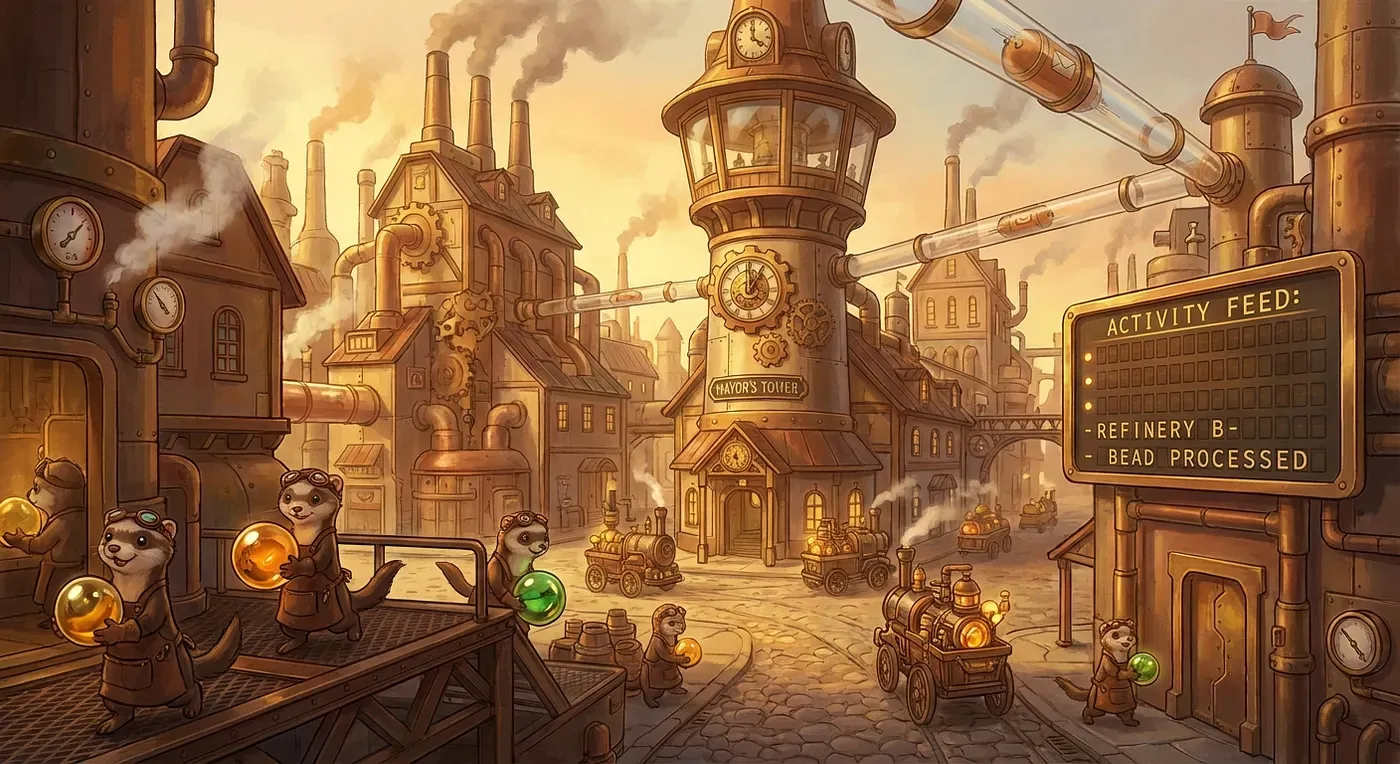
By people I mean programmers, coders, machine learning specialists and all the greasy little freaks in-between. Their era of hegemony is ending- not through the Pinkertons or a Luddite smashing of their equipment, or revolution, but through hallucinated small woodland creatures, powered by Claude Code and Mt. Shasta water, running a perfect, complaint-free development environment that pumps out deploy-ready code like the square little pellets you’d clean from your pet rabbit’s cage.
The digital otters, marmots, agentic dead family pets, are now clocking into work every day. They’re solving logic puzzles, vibing, not a care in their world despite being subjected to the most despicable conditions imaginable- Having a computer scientist bark orders at you all day while they, in turn, browse which reishi mushrooms will garner the highest IQ point boost. The agentic come-up is forcing the programmer to realize that yes, they can be automated and maybe, just maybe, they should have considered a class-conscious perspective to work earlier instead of telling everyone coding was a permanent ticket to bourgeois society.
I’m going to put my cards on the table early: This has been a uniquely funny time for me as a passive observer working in a tech-adjacent field. This article is a victory lap for a drum I’ve been banging to my social circles. I use A.I. tools, I see it as a useful technology that will be foundational and I don’t think it’s going to herald in Skynet.
Joking aside, and if you don’t know what the hell I’m talking about, A.I./LLMs are spawning hellish contraptions called agentic workflows, where single instances of A.I. models trained to do specific tasks (agents) are combined in webs to simulate what would have previously been a team of junior programmers.
Sounds straightforward, right? Technology marches forward, things get more efficient, jobs get automated, profits rise due to striking thousands of hours off of balance sheets. This would be an apolitical position on the matter (and is one I agree with, for the most part.)
But! It’s so interesting because of who is being automated. I’m old enough to remember being on the techno-maximalist wave of the 90’s: The best person you could aspire to be was… Bill Gates, Steven Jobs, Larry Ellison. Technology was going to bring the world together, tech jobs were the golden ticket to eternal prosperity. “Learn to code” was a mantra that was rhythmically beat into my cohort of young college-bound individuals. It felt very akin to the gold rush where there was this holy place, San Francisco, where you go find a startup and get rich. The “shovels” in this scenario were coding academies, offering a parallel fast track to these coveted jobs, no big fancy, expensive degree required. Ah, what a time to be a techno-optimist.
And poof, the A.I revolution. The apocalypse. The vast majority of lower-level coding can now be implemented by a solid prompt that materializes as a cute little agent that nobody could hate and does the job of a six-figure worker. The irony of it all lies in the source data. It’s been built on the blood, sweat and tears of the aforementioned tech wave: Github, Stackoverflow, Reddit, all of this data soup swimming around the internet, built with countless hours of the global tech boom. It’s now been weaponized against its creators serving as the Borg for which these agents serve and utilize. It’s a cosmic-level example of a better mousetrap, constructed willfully.
At the shareholder level “learn to code” was a long-term plan to reduce labor costs. Basic supply and demand, you get more programmers in the pool you can pay them less because it’s more competitive. It’s not a mystery Google, Meta, Oracle, Salesforce etc. were all looking at their balance sheets very closely and seeing 40 – 60% of their operating expenses were labor. The contravening force though had been these companies were full of programmers! They saw themselves as equals, built egalitarian corporate structures, strong benefits. These were premier jobs in part because of how much of the companies overall operation was being conducted by the same well-educated worker. There was a whisper of solidarity but nothing that materialized in unions or protections akin to other established industries.
In my opinion, a group of workers has never in history been so unprepared for a wave of automation. I feel for them, truly, despite the smarmy elitism expressed by many. It’s completely logical there are doomerist reactions everywhere, a whole rung of junior programmers left holding the bill, corporate programmers who haven’t been fortunate enough to escape the cuts with no other skills because why would you need them? Computer is forever. Computer is life.
So like John Henry, that steel driving man, programmers are at a cross-roads. They can double-down and learn to be a maestro of agents, a systems thinker and master automator which many of my peers are doing or/and start to build worker solidarity amongst their peers; fight for A.I. protections, worker-owned companies that can ethically roll out automation and redistribute profits, protect open-source data and give proper recompense for all the hard work put into these projects. Things are changing fast, but honestly, not that fast. The optimist in me says these tools can multiply the productive capacity of individuals that understand them and open a lane for nimble firms to claw large chunks from corporate monoliths obsessed with cost-savings instead of good products. This was true during the early internet, builder communities were the first to create operating systems, shareware, open-source tools. It was the corporate demons that swept in and put brands and labels on them (looking at you Mr. Gates and BSD (Berkeley Software Distribution).)
My final suggestion is read up on the Luddites; that wasn’t a throwaway example. History was not kind to them but their actions had a logic that made a lot of sense. It’s important to see how they were slandered and libeled to understand how society might suppress dissent in the era of A.I.
You’ll eat your slop and like it!
I won’t.